
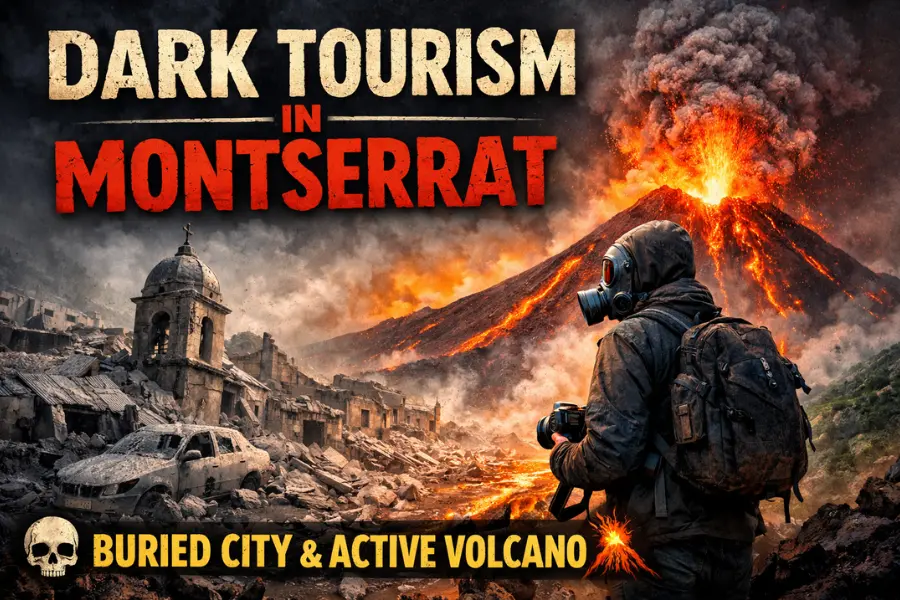
Montserrat Dark Tourism Guide 2026: Exploring the Buried City & Active Volcano
If you’re searching for a travel experience that goes beyond beaches and resorts, Montserrat offers something unforgettable. Known as the Caribbean’s “Emerald Isle,” this small island hides a powerful story of destruction, survival, and rebirth.
Driven by the devastating eruptions of the Soufrière Hills Volcano, Montserrat has become one of the world’s most fascinating dark tourism destinations—often compared to Pompeii and even Chernobyl Exclusion Zone.
This 2026 travel guide explores why Montserrat is trending, how to visit safely, and what makes it a must-see destination for adventurous travelers.
Why Montserrat Is a Rising Dark Tourism Hotspot
Dark tourism—visiting places associated with tragedy or disaster—is gaining popularity worldwide. And Montserrat stands out because its story is still unfolding.
Since 1995, volcanic eruptions have:
- Buried entire towns
- Forced mass evacuations
- Reshaped the island’s geography
Today, nearly two-thirds of Montserrat remains a restricted exclusion zone, making it one of the few places on Earth where you can witness ongoing geological transformation.
Travelers rate Montserrat highly on the “dark tourism scale” (around 8/10), thanks to its authenticity, accessibility, and emotional depth.
Montserrat’s Buried City: Plymouth – A Modern-Day Pompeii
At the heart of Montserrat’s dark tourism lies Plymouth, once a vibrant Caribbean capital.
After the eruptions intensified between 1995 and 1997, the city was abandoned and eventually buried under volcanic ash—some areas reaching over 60 feet deep.
What You’ll See Today
- Buildings partially visible through hardened ash
- Streets frozen in time
- Abandoned vehicles and homes
- A haunting, silent landscape
Walking through Plymouth feels surreal—like stepping into a paused moment in history.
Read also: How to Spend 4 Days in Jeju Island: East vs West Coast Guide + Budget Tips
Visiting the Buried City
Access to Plymouth is strictly controlled for safety reasons.
How to Explore Safely
- Guided Tours Only: Entry allowed with certified local guides
- Special Permits Required: Especially for deeper zones (Zone V)
- Boat Tours: Safer coastal views of the ruins
- Helicopter Tours: Aerial perspective from nearby islands
Local authorities, including the Montserrat Volcano Observatory, monitor volcanic activity 24/7 to ensure visitor safety.
Soufrière Hills Volcano: Montserrat’s Living Giant
No visit to Montserrat is complete without experiencing the Soufrière Hills Volcano up close.
This active volcano has been erupting intermittently for decades, making it one of the most closely studied volcanoes in the Caribbean.
What Makes It Unique
- Dome-building volcanic structure
- Occasional ash plumes and gas emissions
- Nighttime glow during active phases
Best Ways to Experience the Volcano
1. Volcano Observatory Visit
The Montserrat Volcano Observatory offers:
- Interactive exhibits
- Documentary screenings
- Real-time monitoring insights
- Safe viewpoints of the volcano
2. Guided Hikes & Viewpoints
Popular spots include:
- Garibaldi Hill – panoramic views of Plymouth
- Safe trekking routes with expert guides
3. Helicopter Tours
Short flights from Antigua provide breathtaking aerial views of:
- Lava domes
- Ash-covered landscapes
- The buried capital
How to Reach Montserrat
Getting to Montserrat is part of the adventure:
- Fly to Antigua (international gateway)
- Take a ferry or helicopter transfer
- Arrive at John A. Osborne Airport or Little Bay
Despite its remote feel, Montserrat is surprisingly accessible for travelers.
Travel Tips
Planning a trip to Montserrat requires preparation.
Essential Tips
✔ Always travel with certified guides
✔ Wear sturdy shoes and carry a dust mask
✔ Check volcanic activity updates before visiting
✔ Avoid restricted zones without permission
✔ Respect local communities and history
The Human Story Behind Montserrat
Montserrat is not just about landscapes—it’s about people.
The eruptions displaced over half the population, forcing many residents to leave their homes. Today, survivors share their stories through guided tours, making visits deeply personal and emotional.
The northern part of the island is now thriving, offering:
- Lush rainforests
- Black sand beaches
- Unique Irish-Caribbean culture
Why Montserrat Is More Than Just Dark Tourism
While the ruins of Plymouth attract attention, Montserrat offers a rare balance:
- Adventure tourism
- Cultural immersion
- Natural beauty
- Historical reflection
It’s a destination that challenges how we see travel—not just as leisure, but as learning.
Amazing Facts
:- Montserrat is one of the only places where a capital city is completely buried and still visible today
:- The volcano has been monitored continuously since 1995
:- The island is nicknamed the “Pompeii of the Caribbean”
:- Over 50% of the population relocated after eruptions
:- Montserrat has strong Irish heritage—St. Patrick’s Day is a major festival here