
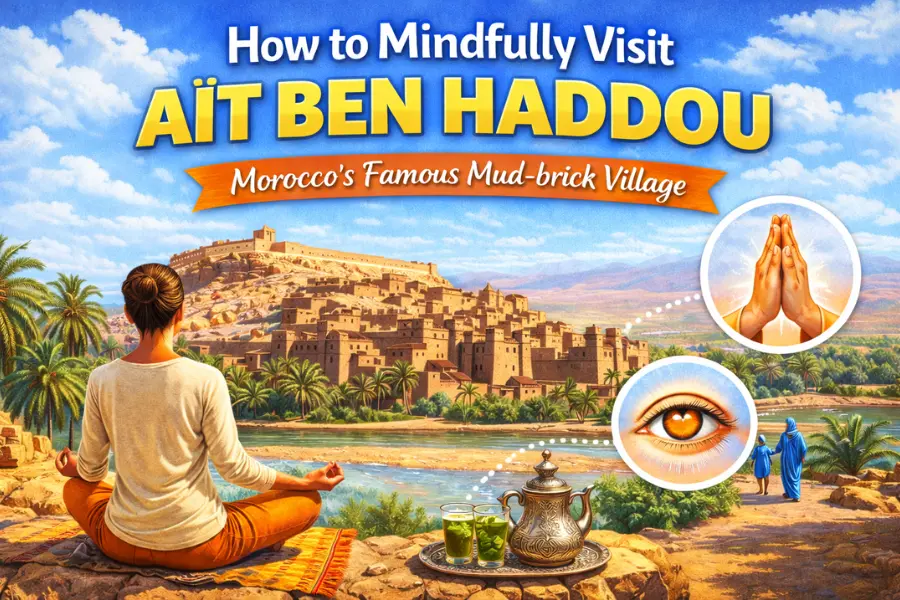
Aït Ben Haddou Travel Guide: A Living Desert Fortress Beyond the Movies
Rising from the edge of the High Atlas Mountains like a mirage, Aït Ben Haddou is one of Morocco’s most breathtaking and culturally rich destinations. With its ochre mud-brick towers, maze-like alleys, and cinematic fame, it’s easy to see why this UNESCO-listed ksar (fortified village) captures the imagination of travelers from around the world.
But Aït Ben Haddou is more than a film set backdrop. It is a living heritage site rooted in Amazigh (Berber) history, tradition, and resilience. Visiting thoughtfully allows you to experience not only its beauty but also its vibrant community and cultural legacy.
If you’re planning a trip to Morocco and want a meaningful, responsible, and unforgettable experience, this guide will show you how to explore Aït Ben Haddou the right way.
Why Aït Ben Haddou Is More Than a Hollywood Icon
Aït Ben Haddou gained global recognition after appearing in major productions like Gladiator, Game of Thrones, and Lawrence of Arabia. Its dramatic desert landscape and ancient architecture make it a filmmaker’s dream.
However, long before the cameras arrived, this ksar served as an important stop along trans-Saharan trade routes. Caravans carrying salt, gold, and spices once passed through its gates.
Amazing Facts About Aït Ben Haddou
- It is built entirely from adobe (mud and straw), designed to withstand extreme desert climates.
- The ksar dates back centuries and was once home to powerful merchant families.
- It is one of Morocco’s best-preserved fortified villages.
- Only a few families still live within the ksar walls, preserving traditional ways of life.
- The word “ksar” refers to a fortified village made of earthen clay architecture.
Today, Aït Ben Haddou stands as both a historical treasure and a living cultural symbol.
Day Trip vs. Overnight Stay
Most travelers visit Aït Ben Haddou as a day trip from Marrakech. While convenient, this option often feels rushed, especially with the long drive through the Atlas Mountains.
Day Trip Experience
- Quick exploration of the ksar
- Large tour groups
- Limited interaction with locals
- Midday crowds and heat
While a day trip offers a glimpse of the fortress, it may not allow you to truly appreciate its atmosphere.
Why Staying Overnight in Aït Ben Haddou Is Better
Spending a night transforms your experience completely. Early mornings and sunsets reveal the ksar in golden light, free from crowds. The silence, the breeze through the palm groves, and the echo of footsteps in narrow alleys create an unforgettable atmosphere.
Overnight stays also allow you to:
- Connect with local families
- Support guesthouses run by residents
- Enjoy traditional Amazigh meals
- Experience authentic village life
Choosing to stay longer helps distribute tourism income directly to the community.
Read also: Visit Poznan: Things to do in Poznan, Poland
How to Visit Aït Ben Haddou Responsibly
Responsible tourism is essential in preserving Aït Ben Haddou’s fragile mud-brick architecture and supporting its local population.
1. Hire a Local Guide
Entry to the ksar is free, but hiring a local guide enhances your understanding of its history, legends, and architecture. Many guides are residents who rely on tourism to support their families.
They provide insight into:
- Traditional building techniques
- Cultural customs
- Trade route history
- Film production stories
This small investment creates meaningful economic impact.
2. Support Women’s Cooperatives
Several women-led cooperatives sell handmade rugs, textiles, argan products, and crafts. Purchasing directly from these groups helps empower local women and sustain traditional skills.
Look for community-based initiatives such as local tourism cooperatives that promote ethical experiences and cultural preservation.
3. Respect Local Life
Although many residents now live across the river in the modern town, some families remain inside the ksar. Always ask before photographing people and respect private spaces.
Avoid treating the village like a theme park—it is still someone’s home.
What to See and Do
Wander the Ancient Alleys
The narrow pathways twist upward through terraced homes and defensive towers. Climbing to the top rewards you with panoramic views over the Ounila Valley and surrounding desert landscape.
Sunrise and sunset provide the most magical light for photography.
Learn About Adobe Architecture
The ksar’s mud-brick structures are built using local materials mixed with straw for strength. These buildings require regular maintenance, which is often funded through tourism revenue.
This sustainable architecture keeps interiors cool in summer and warm in winter—an ingenious solution developed centuries ago.
Explore Artisan Workshops
Inside the village, you’ll find local artists selling paintings, crafts, and handmade goods. These workshops offer a glimpse into creative traditions passed down through generations.
Best Time to Visit Aït Ben Haddou
The desert climate means hot summers and cooler winters. The most comfortable times to visit are during milder seasons when temperatures are pleasant.
For the best experience:
- Visit early morning or late afternoon
- Avoid peak midday heat
- Consider shoulder seasons for fewer crowds
The golden hue of the ksar during sunset is unforgettable and one of Morocco’s most photographed sights.
Getting to Aït Ben Haddou
Aït Ben Haddou is accessible by guided tour or independent travel.
Options Include:
- Guided tours from Marrakech
- Bus or taxi to Ouarzazate, then a short taxi ride
- Self-driving through the scenic Atlas Mountains
Driving offers flexibility and stunning mountain views along the way.
Why Mindful Travel Matters in Aït Ben Haddou
Tourism plays a crucial role in preserving Aït Ben Haddou’s architecture and supporting local livelihoods. However, overtourism can strain water resources and damage fragile structures.
By choosing eco-conscious tours, staying overnight, and supporting local businesses, you help ensure that tourism benefits residents while protecting this UNESCO treasure.
Responsible travel transforms a simple visit into a meaningful cultural exchange.
FAQs
Yes, it is one of Morocco’s most iconic historical sites and offers breathtaking architecture and cultural depth.
Yes, there are guesthouses in and around the ksar that provide authentic local experiences.
There is no official entrance fee, but hiring a local guide is recommended.
Pingback: Traveling to South Sudan as a Tourist - Travelogy
Pingback: Top Things to Do in Ouarzazate: Morocco’s Little Hollywood You Can’t Miss - Travelogy