
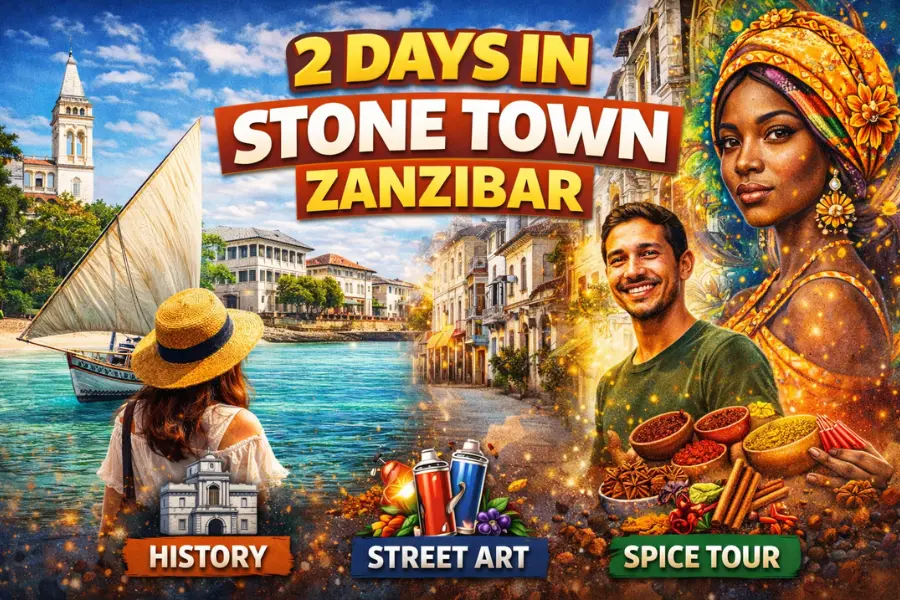
Zanzibar Travel Guide: Discover Stone Town’s History, Culture & Hidden Magic
Zanzibar feels like stepping into a living museum—where carved wooden doors open into centuries of stories, spices perfume the air, and the Indian Ocean hums just beyond ancient coral-stone walls. At the heart of it all lies Stone Town, a UNESCO-listed labyrinth that blends Swahili, Arab, Persian, and European influences into one unforgettable experience.
This Zanzibar travel guide is perfect for travelers who want history, culture, street life, and soulful sunsets—without rushing. Two days here are enough to fall in love, yet every corner tempts you to stay longer.
Why Zanzibar Is More Than Just Beaches
While Zanzibar is famous worldwide for white-sand beaches, Stone Town reveals the island’s true soul. This compact, walkable district rewards slow exploration: wandering alleyways, chatting with spice sellers, listening to prayer calls echo at dusk, and discovering murals painted by local artists.
What makes Zanzibar special:
- One of East Africa’s most walkable historic cities
- A rare blend of African, Arab, and Indian cultures
- Affordable food, tours, and stays
- Deep, emotional history paired with vibrant daily life
Day 1 in Zanzibar: History, Heritage & Night Markets
Your first day in Zanzibar is all about understanding its past—beautiful, powerful, and sometimes painful.
Morning: Icons of Old Zanzibar
Start early to beat the heat and crowds.
Old Fort (Ngome Kongwe)
A sturdy coral-stone fortress built by the Omanis. Today, it hosts small shops, art stalls, and cultural events. Entry is free, making it a great introduction to Stone Town.
Palace Museum (Beit el-Sahel)
Once home to Zanzibar’s sultans, this museum displays royal furniture, portraits, and everyday objects that reveal how the ruling elite lived.
House of Wonders (Beit al-Ajaib)
An architectural landmark known for introducing electricity and elevators to the region. Even when exhibits are limited, the building itself tells a story.
Afternoon: Zanzibar’s Most Powerful Sites
Anglican Cathedral & Former Slave Market
Built on the site of the old slave market, this stop is deeply moving. The underground chambers and memorials offer an essential understanding of Zanzibar’s role in the Indian Ocean slave trade.
Forodhani Gardens
A breezy seafront park ideal for resting your feet and people-watching as locals gather before sunset.
Evening: Forodhani Night Market
As night falls, Zanzibar comes alive.
Grilled seafood skewers, Zanzibar pizza, sugarcane juice, cassava snacks, and coconut bread fill the air with irresistible aromas. It’s affordable, social, and unforgettable.
💡 Local Tip: Choose stalls with high turnover—fresh food and better hygiene.
Read also: Perfect Yogyakarta Weekend: Temples, Jeep Tours & Street Art
Day 2 in Zanzibar: Street Art, Spices & Rooftop Views
Your second day shows Zanzibar’s creative and sensory side.
Morning: Street Art & Local Markets
Stone Town Street Art Walk
Beyond history, Zanzibar has a growing street art scene. Murals hide in alleys, telling stories of identity, heritage, and modern life. A self-guided walk lets you explore freely.
Darajani Market
This is the beating heart of daily life. Piles of cloves, nutmeg, vanilla, tropical fruits, and fresh fish create a colorful, chaotic scene. Prices are low, and bargaining is expected.
Afternoon: Spice & Storytelling
Spice Farm Tour
Zanzibar isn’t called the “Spice Island” for nothing. A guided farm visit introduces you to cloves, cinnamon, cardamom, turmeric, and non-native fruits—all with hands-on tasting.
Princess Salme Museum
A small but fascinating museum about a Zanzibari princess who married a European and wrote one of the earliest autobiographies by an Arab woman.
🌿 Amazing Fact: Zanzibar once supplied most of the world’s cloves—and still produces some of the strongest varieties today.
Evening: Rooftop Sunsets & Dhow Sails
End your Zanzibar journey on a high note.
Rooftop Bar Experience
Rooftop cafés offer panoramic views of Stone Town rooftops melting into the sea. As the sky turns gold, the city feels timeless.
Optional Dhow Sunset Cruise
Traditional wooden boats glide across the water as the sun dips below the horizon—a peaceful, romantic way to close your stay.
Practical Tips for Visiting Zanzibar
- Walking Distance: 3–5 km per day, mostly flat
- Getting Around: Walk, tuk-tuk, or hotel-arranged tours
- Dress Code: Modest clothing recommended in Stone Town
- Money: Cash preferred in markets
- Health: Basic precautions advised; consult travel clinics before arrival
Amazing Facts About Zanzibar
- Stone Town doors are carved to show the owner’s wealth and origin
- Zanzibar influenced Swahili culture across East Africa
- Freddie Mercury was born here
- Many buildings are made from coral stone
- Calls to prayer echo five times daily, shaping the city’s rhythm
FAQs
Yes, especially in Stone Town. Stay aware in crowded markets.
Two days are ideal for history, culture, and food.
No—food, transport, and attractions are budget-friendly.
Absolutely. Stone Town is perfect for self-guided exploration.
Pingback: Catania Weekend Guide: Baroque Walks, Seafood & Mount Etna Views - Travelogy